Istituto Superiore per la Protezione
e la Ricerca Ambientale

Cerca
Earth Observation for Planning Urban Heat Island Mitigation Measures: Results from the MIRIFICUS Project
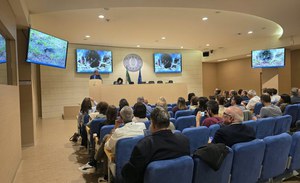
Jul 06, 2026 09:30 AM — Jul 06, 2026 01:00 PM Rome, ISPRA headquarter, via Vitaliano Brancati 48

Urban heat islands are characterized by higher temperatures in cities compared to the surrounding natural areas. This temperature increase results from several factors associated with urbanization, including reduced vegetation cover, heat-generating human activities, limited natural ventilation, the use of materials that absorb and retain thermal energy, and soil sealing. To mitigate these effects, public administrations can promote measures aimed at improving the urban microclimate, reducing surface temperatures, and enhancing urban resilience, such as urban reforestation and the redevelopment of paved surfaces.

This phenomenon is increasing as a result of climate change and urban and territorial transformations, which have led to greater land consumption and the loss of vegetation.

Thanks to data acquired from the main Earth Observation satellite systems—including the medium- and high-resolution Copernicus Sentinel, NASA Landsat, and ASI PRISMA missions—the MIRIFICUS project (Monitoring Reforestation Interventions for Urban Heat Islands through Satellites) provides urban, vegetation, and thermal indicators across the entire Italian territory, with a particular focus on urban agglomerations.

One of the project’s main outcomes is the development of a Geographic Information System (WebGIS) based on interactive maps, enabling different stakeholders—from citizens to territorial planners and managers—to access and consult relevant data and information. The system offers a particularly valuable tool for public decision-makers and local administrators.

Project activities included two case studies in the cities of Florence and Rome, where the effectiveness of two hypothetical urban reforestation interventions in mitigating the effects of intra-urban thermal anomalies was assessed through an ex-post comparison of the modeled interventions.

The event will present the results of thermal anomaly monitoring conducted during the summer months (June–August) over the period 2013–2023 in the regional capitals analyzed, and will illustrate how to access and consult the information system developed within the project.

The meeting, which will take place on 6 July at ISPRA headquarters, is intended for public administrators, researchers, and experts in environmental data governance and sharing. It is also open to citizens, associations, and anyone interested in urban sustainability issues.

The program includes a discussion session between speakers and participants, aimed at fostering the exchange of experiences and best practices to support initiatives designed to counter the urban heat island phenomenon.

The MIRIFICUS project is funded by the Italian Space Agency (ASI), with scientific support from the National Research Council of Italy (CNR) and the Italian Institute for Environmental Protection and Research (ISPRA)

Program

MIRIFICUS Project 

Highlight

Topics in evidence

The Manual for the Application of VIncA Procedures in Marine Sites has been Published
Jun 24, 2026

This volume offers a methodological guide for professionals, technicians, and public administrations involved in protecting marine and coastal biodiversity.

The Manual was created as part of the LIFE SEA.NET project "Urgent actions for the implementation of the Natura 2000 marine network" (LIFE20 GIE/IT/000763) to support the Ministry of the Environment and Energy Security's initiatives to strengthen and optimize the application of the Environmental Impact Assessment (VIncA) procedure in marine and marine-coastal sites of the EU Natura 2000 network.

continue
CII500K – The New Hydrogeological Map of Italy’s Groundwater
Jul 10, 2026 09:00 AM — Jul 10, 2026 04:30 PM Roma, Auditorium MASE “Ilaria Alpi e Miran Hrovatin”, via Capitan Bavastro 182

The Blue Gold of Our Country

In Italy, we drink groundwater: more than 84% of the country’s civil water demand is supplied by spring water or water extracted from underground aquifers through wells.
A true “Blue Gold” resource that is renewed every year and must be understood, protected, and enhanced.

These needs are addressed by the new Hydrogeological Map of Italy at a scale of 1:500,000 (CII500K), which, after being presented to the scientific community, will be officially presented to the public on June 9 during an event at the Auditorium of the Ministry for the Environment and Energy Security.

The event will provide an opportunity to illustrate how the map was developed and to showcase the wealth of information it contains. The project was coordinated by ISPRA and the “Ardito Desio” Department of Earth Sciences at the University of Milan, in collaboration with ISTAT, CMCC (Euro-Mediterranean Center on Climate Change), and the seven District Basin Authorities, as well as with the participation of the wider groundwater expert community: Regions and Autonomous Provinces, ARPA/APPA environmental agencies, universities, research institutions, and professional associations. This initiative represents the first example of “participatory cartography” in Italy.

Program

Map of Italy at a scale of 1:500,000

continue
Reclamation and landfill materials
Jul 02, 2026 09:30 AM — Jul 02, 2026 05:00 PM Auditorium del CNR, Piazzale Aldo Moro n. 7, Roma

On July 2, an event organized by ISPRA entitled “SNPA Guidelines 46 and 46bis on Fill Materials: Regulatory, Operational, and Management Perspectives” will take place at the CNR Auditorium in Rome.

The conference is dedicated to the proper management of fill materials, a topic of growing importance in terms of environmental sustainability, land protection, and the proper planning of remediation and redevelopment activities.

continue
All ISPRA Events All News

June

June